About This Quiz
Think chemistry is all petri dishes and textbooks? This quiz begs to differ, noting the science tucked inside toast crusts, fizzing sodas, and coin jingles.
Across 20 quick‑fire questions you’ll tackle periodic puzzles, pick out rogue functional groups, and decide which invisible gas quietly rules the wide blue sky. Weigh shiny metals, untangle electron traffic rules, and spot the tidy principle that keeps orbitals in line—no lab coat needed.
Ace it and you can toast your inner chemist; stumble, and you’ve earned the perfect excuse to chase down another spark of curiosity. Either way, the elements will be cheering loudly.
What's the chemical formula for glucose?
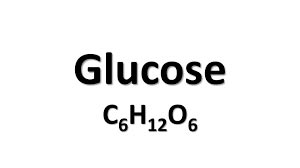 [A] C₆H₁₂O₆ | Glucose is a simple sugar with the chemical formula C₆H₁₂O₆. It is a monosaccharide and an important energy source for living organisms.
Which of these is a noble gas?
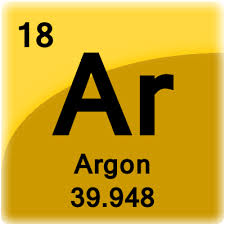 [C] Argon | Noble gases are elements in Group 18 of the periodic table, known for their low reactivity due to having a full valence shell of electrons. Argon is one such noble gas.
What's the pH of a perfectly neutral solution?
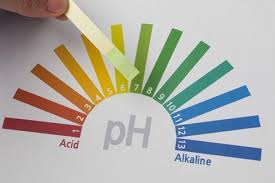 [B] 7 | The pH scale ranges from 0 to 14, with 7 being neutral. A pH less than 7 is acidic, and a pH greater than 7 is basic (or alkaline). Pure water at 25°C has a pH of 7.
Which element is found in every DNA and RNA molecule and is essential for life?
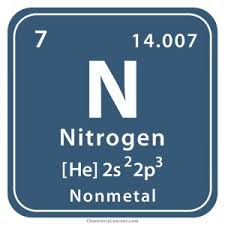 [B] Nitrogen | Nitrogen is a crucial element for life as it is a component of the nucleic acids DNA and RNA, which are essential for storing and transmitting genetic information in living organisms. It is also a major component of proteins in the form of amino acids.
Which silvery metal is most often used to mint coins?
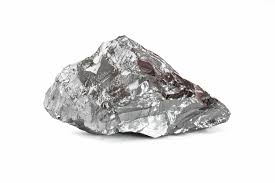 [D] Nickel | Nickel is a silvery metal known for its resistance to corrosion and is often used in the minting of coins, along with other metals, due to its durability and cost-effectiveness. It provides coins with a distinctive look and helps to reduce wear over time.
What metal is brass made from besides copper?
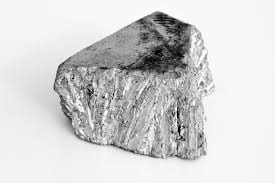 [A] Zinc | Brass is an alloy primarily made of copper and zinc, which gives it its characteristic yellow color.
What principle governs how electrons fill atomic orbitals?
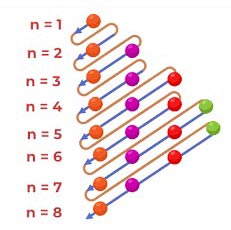 [B] Aufbau principle | The Aufbau principle is a rule in chemistry that describes the step-by-step filling of electron orbitals in an atom.
Which of these is NOT churned out by cellular respiration?
 [C] Oxygen | Cellular respiration is a process that consumes oxygen and produces carbon dioxide, water, and ATP. Oxygen is not a product but a reactant in this process.
What is the most common hydrogen isotope?
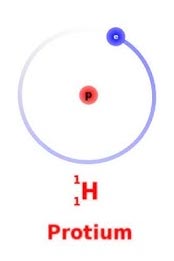 [B] Protium | Protium is the most common isotope of hydrogen, which has no neutrons in its nucleus.
Which pair gets the functional group wrong?
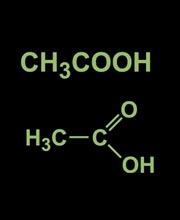 [B] CH₃COOH-hydroxyl | CH₃COOH is acetic acid and contains a carboxyl functional group, not a hydroxyl group. The hydroxyl group is found in alcohols like CH₃OH (methanol).
What is the chemical formula of ethanol?
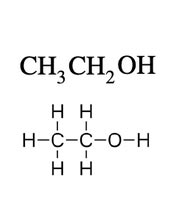 [C] CH₃CH₂OH | Ethanol, a common alcohol, has the chemical formula CH₃CH₂OH, which represents two carbon atoms bonded to a hydroxyl group.
Which periodic-table group is francium in?
 [A] Group 1 | Francium is an alkali metal and is located in Group 1 of the periodic table, which includes all the elements with a single electron in their outermost shell.
What chemical is made by the Haber process?
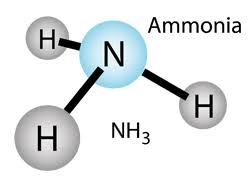 [B] Ammonia | The Haber process is a method for producing ammonia from nitrogen and hydrogen gases under high pressure and temperature.
Which chemist got the Nobel Prize for discovering the noble gases?
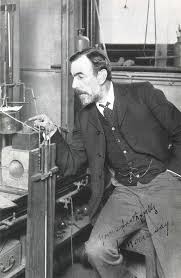 [A] Sir William Ramsay | Sir William Ramsay was awarded the Nobel Prize in Chemistry in 1904 for his discovery of the noble gases, including argon, neon, krypton, and xenon.
What is the shape of a methane molecule?
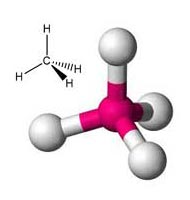 [C] Tetrahedral | Methane (CH₄) has a tetrahedral geometry, with one carbon atom at the center and four hydrogen atoms at the corners of a tetrahedron.
What part of the atom has a negative charge?
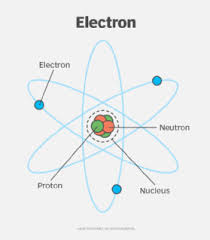 [B] Electron | Electrons are the subatomic particles that orbit the nucleus of an atom and carry a negative charge.
What is the atomic number of Helium?
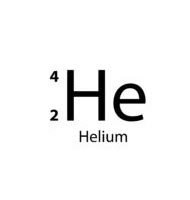 [B] 2 | Helium is a noble gas with an atomic number of 2, which means it has 2 protons in its nucleus.
What is the chemical symbol of iron?
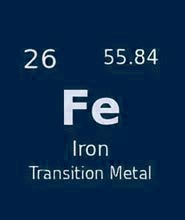 [D] Fe | The chemical symbol for iron is Fe, derived from its Latin name "ferrum."
What gas is the atmosphere mostly made of?
 [C] Nitrogen | The Earth's atmosphere is composed mainly of nitrogen, which makes up about 78% of the air by volume.
What is NaCl commonly called?
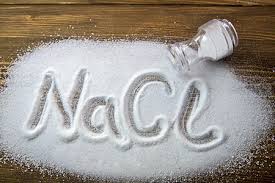 [D] Table Salt | NaCl, or sodium chloride, is commonly known as table salt, which is used for seasoning and preserving food.
Your Scorecard
20 Chem Basics: Know ’Em All?
- Correct
- Correct Rate%Avg Correct Rate
- L1Difficulty Level1xPoints
- Get Points
- Perfect100%
- Excellent≥90%
- Very Good≥80%
- Good≥70%
- Passed≥60%
- Failed≤50%
Recent Top Players
Related Quizzes
More from QuizABCD
-
![Spot the Odd Color: Heart Edition (L2)]()
Spot the Odd Color: Heart Edition (L2)
15 QuestionsPlay Quiz -
![Finish the Famous Movie Line! (1)]()
Finish the Famous Movie Line! (1)
16 QuestionsPlay Quiz -
![Everyday Biology: Did You Know? – Part 1]()
Everyday Biology: Did You Know? – Part 1
30 QuestionsPlay Quiz -
![Beyoncé: Finish the Hit Title - Part 2]()
Beyoncé: Finish the Hit Title - Part 2
25 QuestionsPlay Quiz -
![Easy Science Quiz: Can You Get 20/20?]()
Easy Science Quiz: Can You Get 20/20?
20 QuestionsPlay Quiz -
![Name These Looney Tunes Characters (2)]()
Name These Looney Tunes Characters (2)
18 QuestionsPlay Quiz -
![Boy or Girl Group? K-Pop Quick Fire (2)]()
Boy or Girl Group? K-Pop Quick Fire (2)
30 QuestionsPlay Quiz -
![Hair Metal Hero: Name the 80s Bands]()
Hair Metal Hero: Name the 80s Bands
24 QuestionsPlay Quiz
Trending Quizzes
This week-
![50 States Map Quiz, No Stress—Go!]()
50 States Map Quiz, No Stress—Go!
000,000 Plays / 0,000 LikesPlay Quiz -
![50 State Flags Quiz – Part 1]()
50 State Flags Quiz – Part 1
000,000 Plays / 0,000 LikesPlay Quiz -
![]()
Guess the States from EMOJIS! (1)
000,000 Plays / 0,000 LikesPlay Quiz -
![Name Every NFL Team Logo! - Part 1]()
Name Every NFL Team Logo! - Part 1
000,000 Plays / 0,000 LikesPlay Quiz -
![Name That NBA Logo! (All 30) - Part 1]()
Name That NBA Logo! (All 30) - Part 1
000,000 Plays / 0,000 LikesPlay Quiz -
![Spot the Differences: Test Your Keen Eye!]()
Spot the Differences: Test Your Keen Eye!
000,000 Plays / 0,000 LikesPlay Quiz -
![]()
100 Greatest Music Artists Quiz (1)
000,000 Plays / 0,000 LikesPlay Quiz -
![50 Greatest TV Characters – Name ’Em!]()
50 Greatest TV Characters – Name ’Em!
000,000 Plays / 0,000 LikesPlay Quiz -
![U.S. Presidents in Order Quiz (10s)]()
U.S. Presidents in Order Quiz (10s)
000,000 Plays / 0,000 LikesPlay Quiz -
![30 Common Chat Acronyms Quiz]()
30 Common Chat Acronyms Quiz
000,000 Plays / 0,000 LikesPlay Quiz